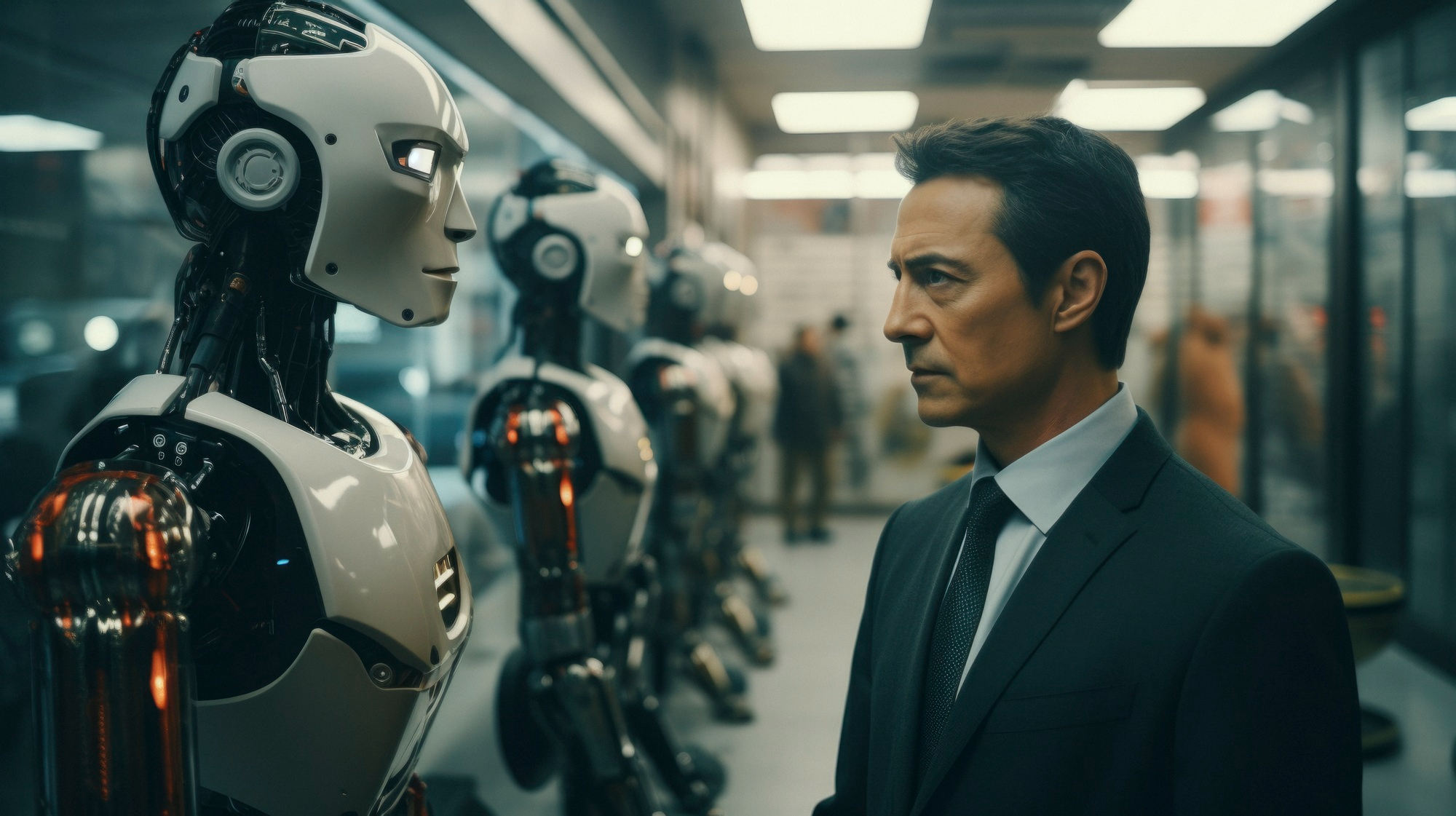
The world of work has undergone a dramatic transformation since the dawn of artificial intelligence (AI). Once confined to research labs and science fiction, AI now powers everyday tools—from customer service chatbots to logistics optimization and medical diagnostics. However, while AI has unlocked new levels of efficiency and productivity, it has also raised pressing questions about job stability, especially in the private sector.
Many professionals have begun to notice a growing instability in private-sector roles, with layoffs, automation-driven restructuring, and shifting skill requirements becoming common headlines. Yet, the story isn’t all doom and gloom. The AI revolution, while disruptive, also brings an abundance of new opportunities for innovation, entrepreneurship, and career growth.
In this article, we explore why private sector jobs are unstable after the AI revolution, the key benefits and drawbacks of this transformation, and how both businesses and employees can adapt positively to this fast-evolving landscape.
Why Private Sector Jobs Became Unstable After the AI Revolution
1. Automation Replacing Routine Tasks
AI thrives on automation—handling repetitive, predictable tasks faster and more accurately than humans. In the private sector, where productivity and cost-efficiency are critical, many roles in customer support, accounting, and manufacturing have seen automation take over.
For instance, AI chatbots can now resolve up to 80% of customer queries without human input, and machine learning algorithms automate data entry and analysis in finance. While this boosts efficiency, it reduces the need for large teams performing repetitive tasks, leading to job reductions or role shifts.
2. Shift Toward Gig and Contract-Based Work
As AI automates back-office functions, companies are rethinking their workforce models. Many private organizations now prefer gig-based or short-term contracts, giving them flexibility to scale staff according to demand.
Platforms like Upwork, Toptal, and Fiverr show how this shift has taken shape—professionals move from full-time employment to project-based contracts. Although this model supports independence, it also introduces instability, as income becomes unpredictable and benefits like insurance and job security fade.
3. Changing Skill Requirements
AI has redefined what companies consider “valuable skills.” The private sector now prioritizes data literacy, programming, digital marketing, and AI management expertise. Unfortunately, employees who lack these new skills find themselves sidelined or struggling to stay relevant.
This skill gap causes uncertainty, especially among mid-level professionals who entered the workforce before the AI boom. Upskilling is essential, but many struggle to keep pace with the technological change.
4. Organizational Restructuring and Lean Operations
AI allows companies to operate with smaller teams. For example, automation in HR can handle recruitment screening, payroll processing, and employee analytics with minimal human oversight.
This “lean operation” mindset has led many private-sector firms to reduce headcounts, particularly in administrative and middle-management roles. Though efficient from a business standpoint, it creates a sense of instability for employees who fear redundancy.
Benefits of AI in the Private Sector
While instability is a concern, the benefits of AI adoption are undeniable. The key lies in understanding how it enhances business and career growth.
1. Boosted Efficiency and Productivity
AI can process massive data sets, forecast trends, and optimize workflows far faster than humans. For companies, this translates into higher productivity with fewer errors. Employees who work alongside AI systems often report reduced workloads and better decision-making support.
2. Emergence of New Job Roles
AI doesn’t just eliminate jobs—it also creates new ones. Positions like AI trainer, data analyst, prompt engineer, automation consultant, and AI ethicist didn’t exist a decade ago.
These roles blend technical knowledge with human creativity and strategic thinking, offering new opportunities for those willing to upskill. The World Economic Forum predicts that while 83 million jobs may be displaced by automation by 2030, 97 million new roles will be created globally.
3. Improved Work-Life Balance
AI can handle time-consuming administrative tasks, freeing employees to focus on creativity, innovation, and strategy. In fields like marketing and design, automation tools generate first drafts or analyze audience insights, allowing professionals to focus on higher-value work.
This improves work-life balance, reducing burnout and enabling remote, flexible working arrangements.
4. Enhanced Decision-Making
AI-driven analytics empower leaders to make data-backed decisions, improving project outcomes and reducing financial risk. In turn, professionals who master AI-based tools become indispensable assets within their companies.
This enhances job satisfaction for those who adapt, as they work on strategic, impactful projects rather than routine work.
Cons of AI Adoption in the Private Sector
Despite its many advantages, the AI revolution also brings certain downsides that explain job instability in the private sector.
1. Job Displacement
The biggest downside remains automation-led layoffs. Sectors like customer support, manufacturing, logistics, and even journalism are seeing roles replaced by machines or algorithms capable of performing tasks more efficiently.
The fear of redundancy has become a reality for millions, especially in roles where human involvement doesn’t significantly enhance value.
2. Economic Inequality
As AI favors those with advanced technical or creative skills, income inequality widens. Highly skilled professionals benefit from high-paying opportunities, while others struggle with job insecurity or underemployment.
This skill divide could create a “two-speed workforce” where only a fraction thrives in the AI-driven economy.
3. Lack of Human Connection
Automation reduces human-to-human interaction. In customer service or HR, this can affect user experience and organizational culture. The private sector must balance efficiency with empathy—something AI still cannot replicate authentically.
4. Ethical and Privacy Concerns
AI systems rely on massive amounts of personal data. Mismanagement or bias in algorithms can lead to discrimination or data breaches, which damage both companies and employees.
These concerns have prompted new regulations and ethical AI frameworks, but compliance remains inconsistent across industries.
The Path Forward: Adapting to AI in the Private Sector
The instability caused by AI isn’t a dead end—it’s a transition period. Success now depends on how individuals and organizations embrace adaptability and continuous learning.
For Employees:
- Upskill regularly. Focus on emerging domains like data science, prompt engineering, or digital strategy.
- Adopt hybrid skill sets. Combine creativity with technology (e.g., digital marketing + analytics).
- Leverage AI tools to enhance productivity rather than resist them.
- Build a personal brand online to attract global freelance opportunities.
For Employers:
- Invest in employee training. Equip teams with skills to use AI responsibly and effectively.
- Adopt ethical AI policies. Ensure transparency, privacy, and fairness in automation.
- Encourage innovation. Create internal incubators where employees can pitch AI-driven solutions.
- Balance automation with empathy. Maintain human oversight in decision-making processes.
The AI revolution has made private sector jobs less predictable—but not less valuable. Change is inevitable, and while automation introduces instability, it also opens doors to innovation, entrepreneurship, and smarter work cultures.
In fact, the private sector now stands at the intersection of technology and human potential. AI is not replacing people—it’s reshaping how we define meaningful work. Those who embrace learning, creativity, and adaptability will not just survive this shift—they will thrive in it. Follow the Recurt For More
10 FAQs
1. Why are private sector jobs unstable after AI?
Because AI automates many routine tasks, companies restructure to operate efficiently with fewer employees.
2. Will AI replace all private sector jobs?
No. AI replaces repetitive roles but creates new jobs in technology, creativity, and data analysis.
3. What jobs are most at risk due to AI?
Data entry, customer service, logistics, and administrative positions are most vulnerable.
4. Which new jobs are emerging after the AI revolution?
Roles like AI trainer, data scientist, prompt engineer, and automation consultant.
5. How can employees stay relevant in the AI era?
By upskilling, embracing digital tools, and learning hybrid skills that combine creativity and logic.
6. Is AI creating income inequality?
Yes, temporarily—until more workers acquire AI-relevant skills.
7. How can employers maintain stability?
By training employees, adopting transparent AI use, and ensuring a human-centered approach.
8. Can AI improve job satisfaction?
Yes. By automating tedious tasks, employees can focus on creative, strategic work.
9. Should small businesses invest in AI?
Absolutely. It improves efficiency and competitiveness while opening new growth opportunities.
10. What’s the future of private sector jobs after AI?
A hybrid model—where humans and AI collaborate to drive innovation, creativity, and sustainable growth.